
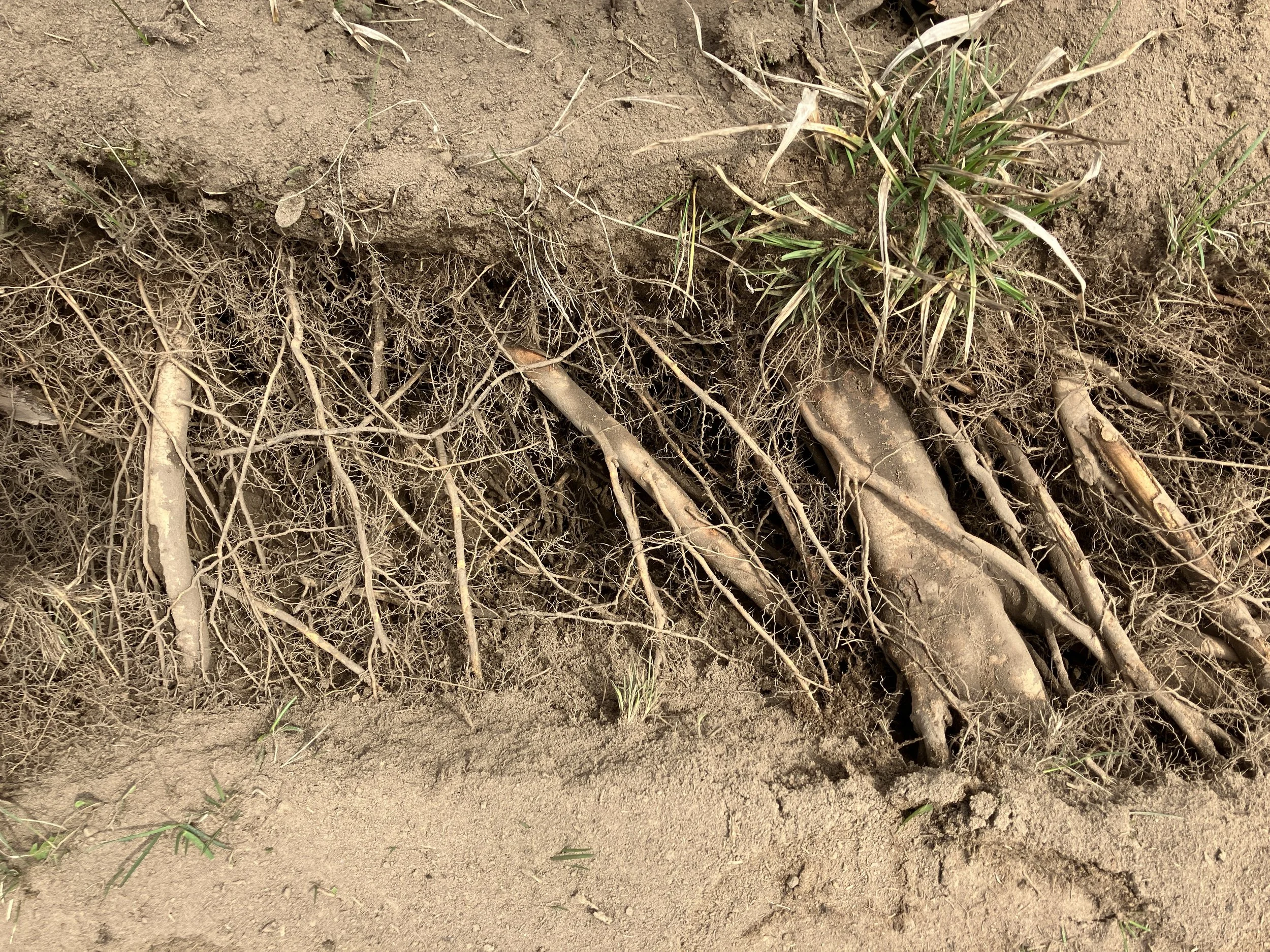
Your permit requires root investigation. The AirSpade gets it done.
Municipal compliance conditions don't wait. I mobilize quickly with dedicated Air Spade equipment to get your root investigation completed, documented, and submitted to Urban Forestry so your project can move forward.
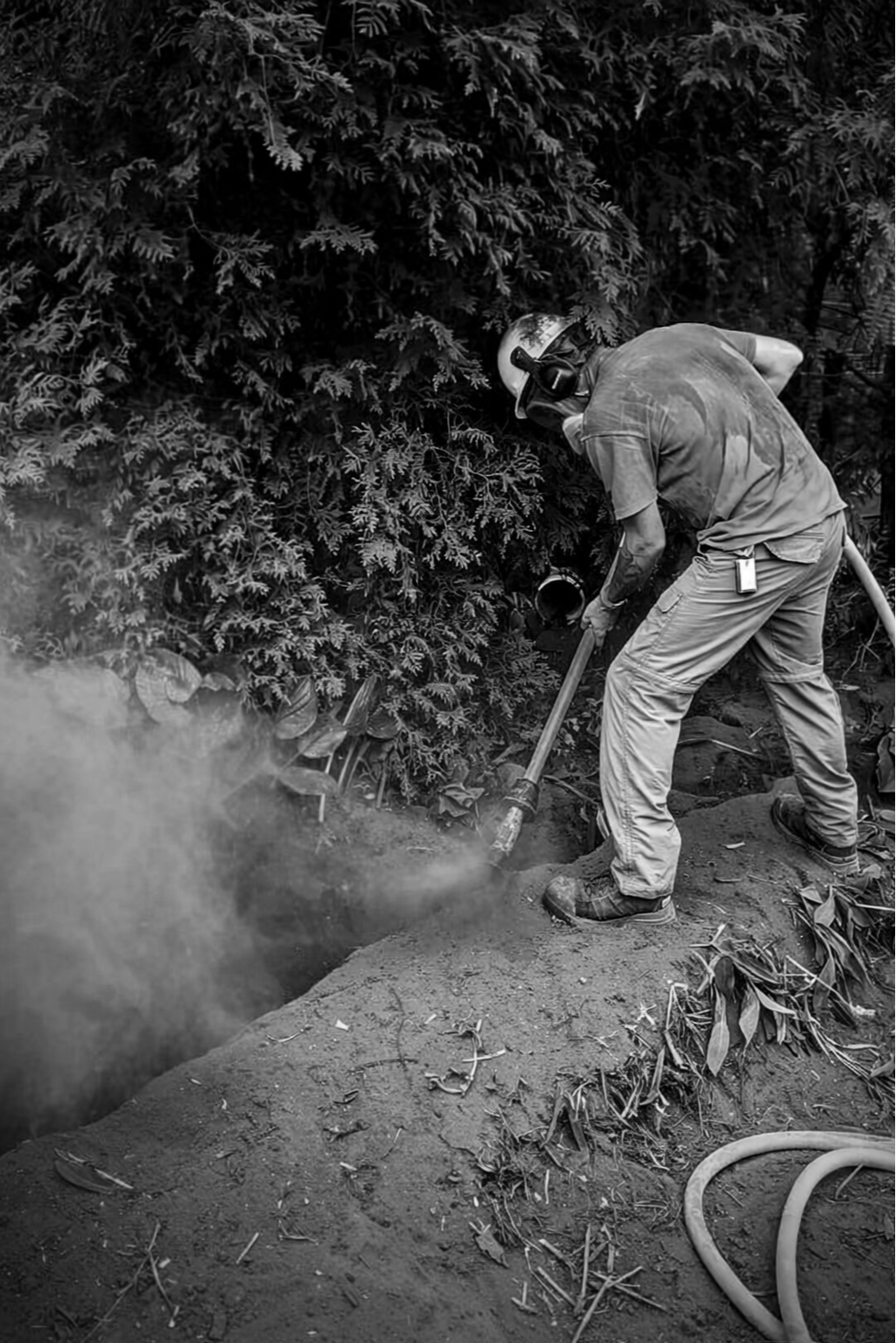
What the condition on your permit actually means.
GTA municipalities regularly condition development permits on AirSpade root investigation before construction can proceed. If you've received one of these conditions, here's exactly what's required and how I satisfy it.
-
Toronto, Hamilton, Mississauga, and other GTA municipalities routinely condition development permits on exploratory root excavation to verify root locations before construction begins. Urban Forestry needs to know where roots are, what will be affected, and whether trees can realistically survive the proposed work.
The condition on your permit will say something like: "Prior to permit issuance, the applicant shall conduct exploratory root investigation within [specified area] and submit findings to Urban Forestry."
What that means for your project: Construction cannot proceed until the investigation is complete and a report demonstrating acceptable impacts has been submitted and accepted.
How I handle it: I excavate with the AirSpade within the investigation areas specified by the municipality. Every root is measured, photographed with scale references, and mapped to precise locations. The investigation report addresses Urban Forestry's specific concerns and demonstrates compliance with preservation requirements. Most reports are ready for submission within three business days of field work.
-
When foundations, excavations, or utilities overlap a tree protection zone, municipalities typically require that roots be pruned cleanly before mechanical excavation begins. This protects the remaining root system from the tearing and crushing that mechanical equipment causes, and it's the difference between a tree that survives construction and one that doesn't.
The condition will say something like: "All roots within proposed excavation areas shall be pruned cleanly by a qualified arborist using pneumatic excavation prior to mechanical excavation."
What that means: Your excavator can't move until this is done.
How I handle it: The AirSpade exposes roots intact within the approved excavation area. Roots are then pruned cleanly at the excavation boundary using sharp tools. Mechanical work can proceed after without contacting the remaining root system, giving the tree the best chance of recovering from what's been removed.
-
Construction encroachment on tree protection zones causes soil compaction from equipment traffic, material storage, or unauthorized excavation. When violations occur, municipalities issue stop-work orders and require documented evidence of impacts and a submitted remediation plan before work can resume.
The order will say something like: "Construction has encroached on tree protection zones. All work shall cease. Applicant shall document impacts and submit a remediation plan within [timeframe]."
What that means: Your project is stopped until compaction extent is documented and remediation is approved by the city.
How I handle it: AirSpade investigation reveals the depth and lateral extent of compaction within the affected area. Remediation uses radial trenching and vertical mulching to fracture compacted soil, restore air and water infiltration, and stimulate new root growth. Documentation includes photographic evidence, compaction measurements, and monitoring protocols for Urban Forestry review.
-
When a tree shows unexplained decline, the cause is often underground. Girdling roots, grade changes, soil compaction, or decay at the root flare are common culprits that are invisible from above. Root collar excavation exposes what's actually happening at the base of the tree without damaging the root system in the process. You get a real diagnosis instead of a guess.
-
Compacted soil is one of the most common and most overlooked causes of tree decline on urban sites. When soil is compacted, roots can't access the air and water they need, and no amount of surface treatment fixes the problem. Vertical mulching and radial trenching fracture the compacted layer, restore infiltration, and give the root zone a genuine recovery path. Particularly effective for established trees on sites with a history of construction activity or heavy use.
How Air Spade Root Investigation Works
Site assessment: We start with a conversation about your permit conditions, review the site plan, and confirm the investigation areas. If you send me your permit conditions directly, I can tell you within the same day what's required and how long it will take.
Pneumatic excavation: The AirSpade 2000 displaces soil using compressed air, exposing roots without cutting or damaging them. Excavation depth and lateral extent are tailored to what the municipality has specified.
Documentation: Every exposed root is measured, photographed with scale references, and mapped to precise location using laser measurement. Nothing gets missed.
Backfill and restoration: Investigation areas are backfilled with the excavated soil and restored to pre-investigation conditions.
Analysis and reporting: Findings are compiled into a technical report with full photographic documentation, impact analysis, and recommendations. Report delivery is typically within three business days of field investigation.
Timeline: Most investigations are complete within one to two weeks from first contact to report delivery. If you have an urgent compliance situation, tell me when you get in touch and I'll prioritize accordingly.
Frequently Asked Questions
-
No. Pneumatic excavation displaces soil without cutting roots. They're exposed intact for documentation or pruning. Temporary air exposure doesn't harm roots as long as the investigation is completed efficiently and the area is backfilled the same day.
-
Depends on scope. A targeted investigation is often a half-day. Comprehensive root mapping or extensive remediation may require a full day or multi-day work. Report delivery is typically within three business days of field investigation.
-
No. When a municipality conditions your permit on root investigation, construction cannot legally proceed until the investigation is complete and findings are submitted. Proceeding anyway risks stop-work orders, fines, and permit revocation. It's not worth it.
-
Sometimes what's underground is worse than expected: major roots in the proposed excavation area, severe compaction, or damage from work that's already happened. The report documents findings objectively and provides recommendations. From there, you work with Urban Forestry to determine the acceptable path forward. Having clear documentation is always better than not knowing.
-
Cost depends on site complexity, investigation scope, and documentation requirements. Most municipal compliance investigations range from ~$1000 to $2,500+. Send me your permit conditions and site details and I'll have a quote back to you within 24 hours.
With Ontario's development charges cut 50% and the HST removed on new builds, construction starts across the GTA are about to surge. More builds means more permit conditions, more root investigations, and longer wait times with busy firms. Get ahead of the rush.

Send me the condition language and your site details. I'll tell you exactly what's needed and how quickly I can get it done.
Your permit condition isn't going away on its own.