
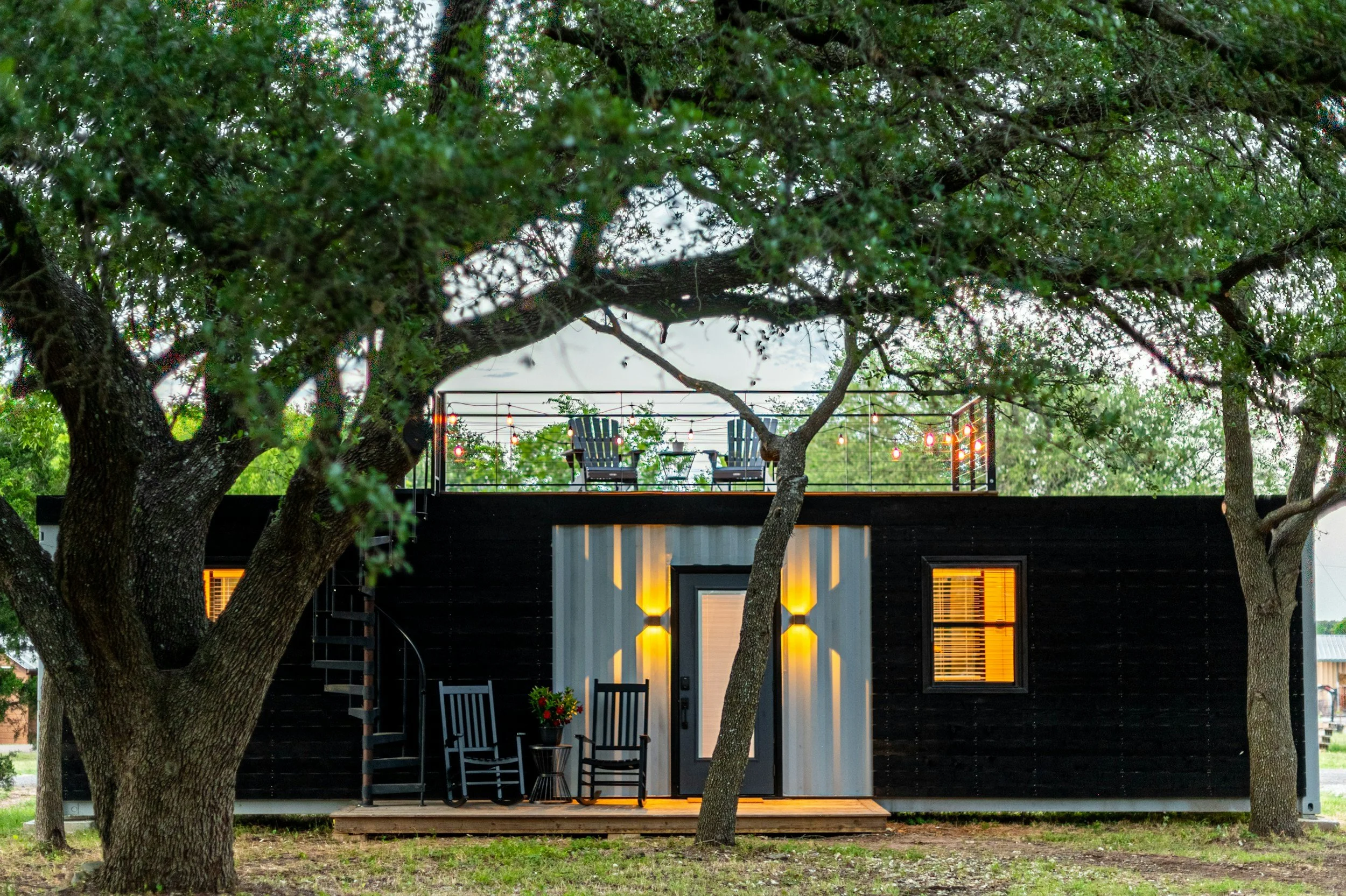
Infill Development Moves Fast. Your Arborist Should Too.
I help developers, builders, and architects navigate the arboricultural side of urban infill projects across Toronto, Mississauga, Oakville, Burlington, Hamilton, and the wider GTA.

We don't just need more housing. We need more neighbourhood.
Affordable, well-located housing determines who gets to stay. A laneway suite is a family that doesn't have to leave. A garden suite is an adult child who would otherwise be priced out of where they grew up. A missing middle project is a street that gets a little more alive. Development doesn't simply mean building more housing. It means building neighbourhoods, communities, relationships, a village.
I know because I lived in one. Two years in an ADU while I finished college and started a life with my now-wife. It remains the best place I ever lived, and that experience is part of why I do this work.
That's why trees aren't an obstacle to manoeuvre around. They're a feature to build with. They're what separates a neighbourhood from a development.
With development charges cut 50% and the HST removed on new builds, infill projects across the GTA are accelerating. Learn what that means for arborist requirements.
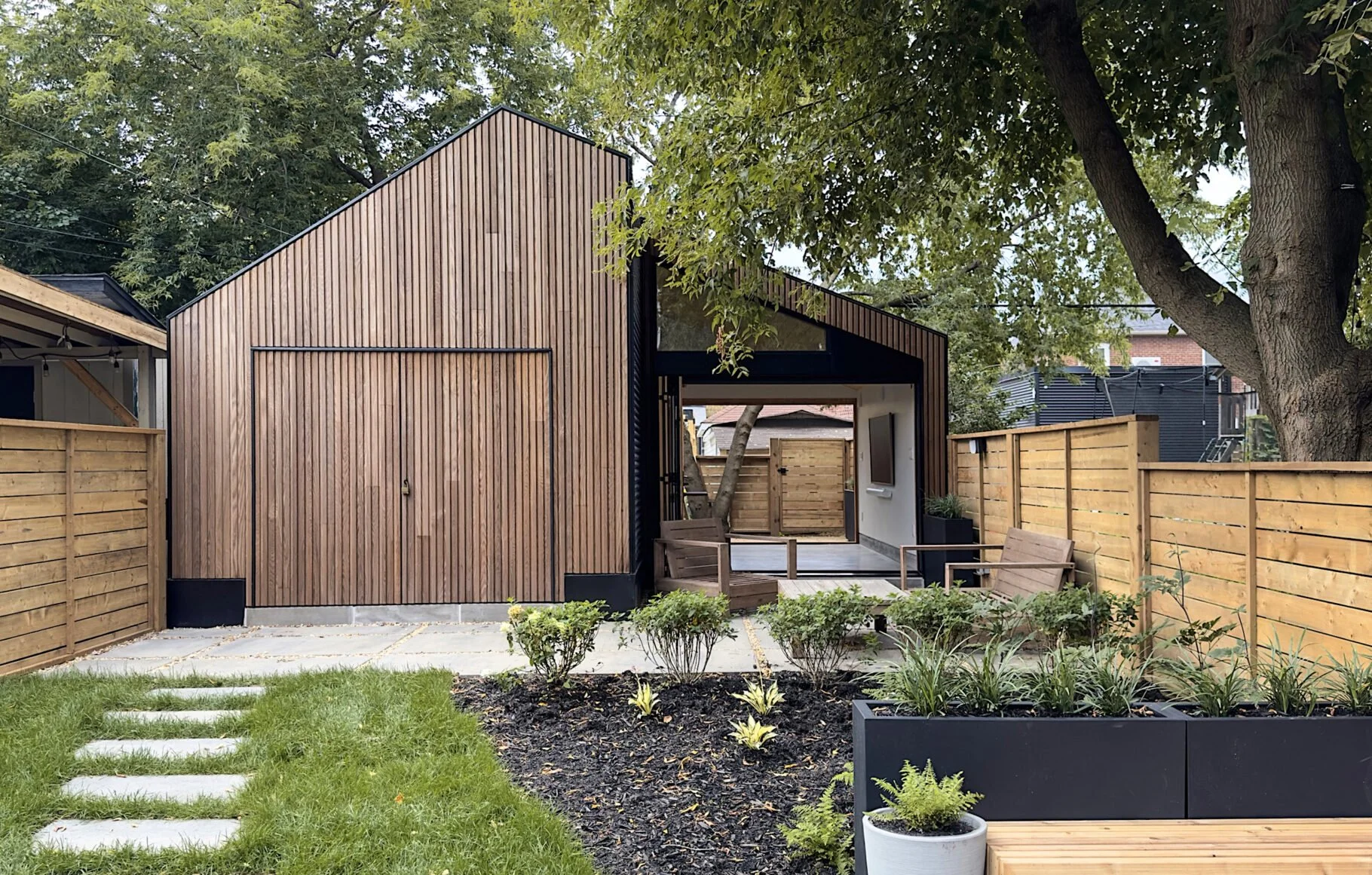
Every metre matters. The neighbour's oak is two metres from your proposed foundation. The city's tree bylaw says one thing; Urban Forestry staff interpret it another. There's a regulated tree nobody flagged during due diligence. The building envelope your architect spent two months designing doesn't account for the tree the city won’t approve for removal.
These aren't hypothetical problems. They're the ones that show up on infill sites regularly, and they're the ones that cause redesigns, missed closings, and tens of thousands in unplanned costs.
One thing missed early in the process can cost you months. That's the stakes.
Infill sites are unforgiving.
A standard report documents what's there and cites the relevant bylaws. On a straightforward project, that's enough. On a 30-foot infill lot with a neighbour tree conflict, bylaw protected trees, and a $500,000+ laneway suite on the line, it isn't.
Infill projects need an arborist who understands the full development lifecycle, not just the tree inventory portion of it. Someone who can read a site plan and flag the root conflict before the engineer finalizes the foundation. Someone who knows how Toronto Urban Forestry operates differently than Burlington's, and what triggers additional scrutiny in each jurisdiction. Someone who can sit in a pre-consultation meeting and speak the same language as the architect, the planner, and the contractor.
That's what I do.
I've worked across GTA municipalities long enough to understand how each one operates, what their reviewers look for, and how to get to approval without the trial-and-error that eats timelines.
Arborist Reports Built for Infill Sites
“I worked with Brent on several laneway & garden suites on difficult properties with large mature trees. He was able to help find creative solutions that resulted in successful Urban Forestry permits. Would highly recommend Brent if you are working on any infill projects in Toronto!”

I work on these projects because I believe in what they deliver. That belief changes how I approach the work.
Projects I support
Laneway Suites & Garden Suites
Accessory dwelling units are one of the most effective tools Canadian cities have for adding gentle density to established neighbourhoods. They house family members, create rental income, and add housing supply without displacing what's already there. They also happen to be some of the most arboriculturally complex projects in residential development: mature trees, tight setbacks, and neighbour conflicts converging in a small space. This is where early arboricultural involvement pays for itself most clearly.
Missing Middle Housing
Multiplexes, townhouses, and small-scale multi-unit development are the housing types most cities underbuilt for decades. They're also the ones that best fit into existing neighbourhood character while meaningfully expanding who can afford to live there. When the building envelope and the tree canopy are competing for the same ground, I help find the design solutions that let both exist.
Residential Additions & Renovations
Second-storey additions, rear extensions, basement underpinning, and substantial renovations that trigger tree preservation requirements. The families investing in these projects are often choosing to stay and grow in their neighbourhood rather than leave it. They deserve a process that doesn't punish that decision with unexpected permit conditions. Homeowners and contractors often don't know the requirements exist until the application comes back with conditions. I help prevent that.
Urban Intensification Projects
Subdivision development, infill housing, and commercial projects in established neighbourhoods with mature canopy and active municipal protection. These projects carry the most civic weight and the most regulatory complexity. They benefit most from getting me involved at the concept stage, before the design is built around assumptions that don't hold up under bylaw review.
When to Bring in an Arborist
Concept Phase Site Analysis
What you get: A clear picture of what the site can actually support before architectural investment begins.
Before your architect draws a single line, I can tell you where the constraints are. Which trees are protected, which ones are borderline, where the critical root zones fall, and what the municipal bylaw is going to require. Knowing that at concept stage shapes the design rather than fighting it later.
Pre-Application & Design Phase
What you get: Documentation that satisfies municipal review on first submission.
Detailed tree protection plans built to municipal standards, arborist reports formatted for the specific jurisdiction, and direct coordination with your architect, engineer, and landscape architect. I also flag foundation alternatives when the standard approach creates tree conflicts, including helical piles, grade beams, and suspended slabs. Neighbour tree protection agreements handled and documented.
Permit Application Support
What you get: Fast, credible responses to city questions that protect your approval timeline.
When Urban Forestry sends a comment or a condition, I respond the same day. I handle technical responses, Committee of Adjustment representation when minor variances are required, and direct communication with municipal staff. Questions don't sit unanswered and turn into delays.
Construction Phase Oversight
What you get: Compliance verification that keeps retained trees alive and keeps the project out of trouble.
Protection verification and documentation, regular monitoring visits, Air Spade excavation when sensitive work is required near roots, and real-time problem solving when site conditions don't match the plan.
Infill consulting is priced based on project complexity, site constraints, and the level of involvement required.
A standard residential infill project typically involves a turnkey approval package: site assessment, arborist report, tree protection plan, and application management. Tree protection implementation and construction phase oversight is scoped separately based on project scale and duration.
I work primarily on value-based fixed fees for defined deliverables. You're buying outcomes: approval certainty, schedule protection, compliance assurance. Not hourly time.
The initial consultation covers a detailed scope discussion and a transparent proposal. No surprises after that.
Investment & Engagement

The best time to bring me in is before the design is locked
The second best time is right now. Whatever stage you're at, a conversation costs nothing and usually clarifies a lot.