
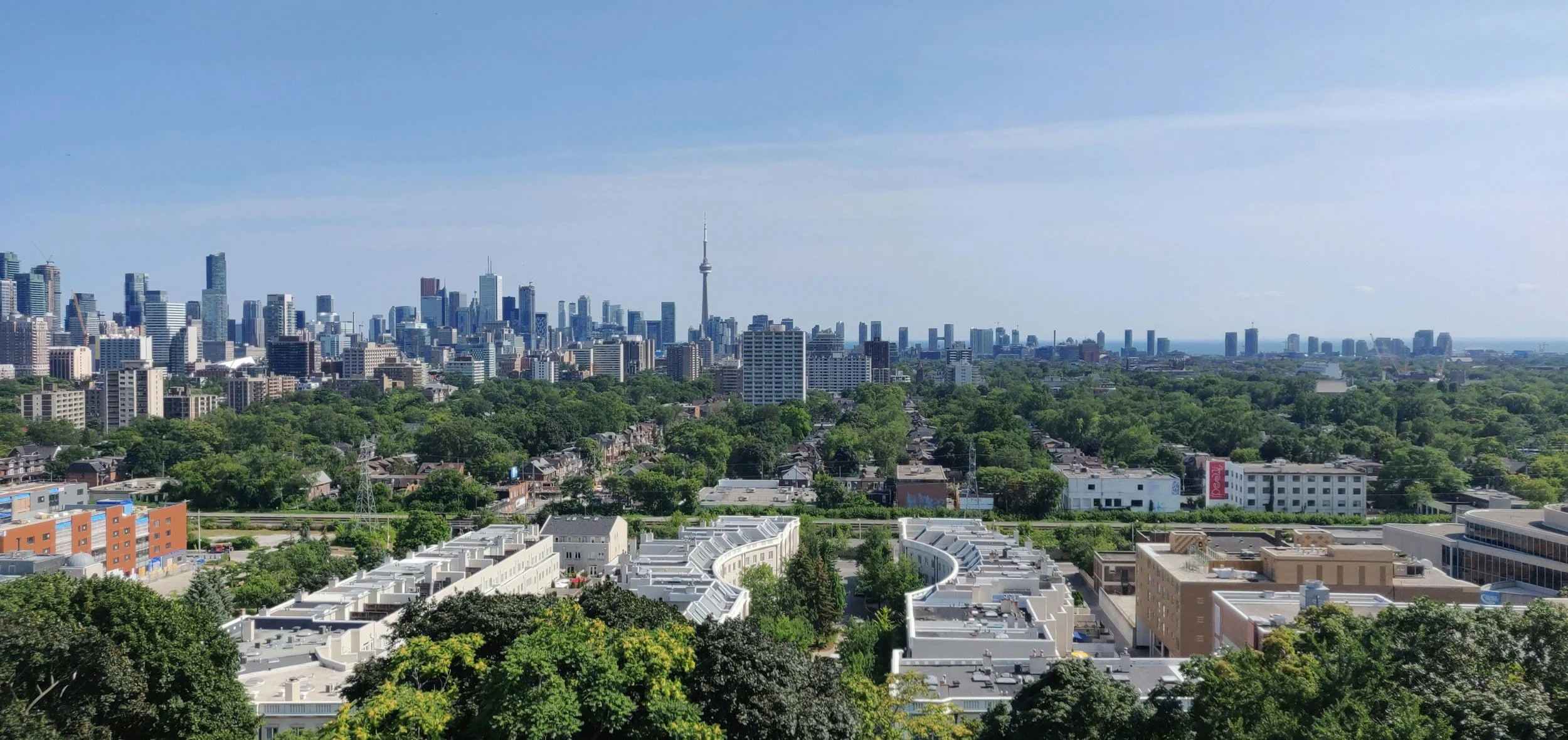
Arboricultural Consulting Services Across the GTA
From single-tree diagnosis, to full arborist reports and tree protection planning for development applications, every client gets my full attention. If a tree is part of your work, your property, or your problem, I can help.

Most people don't need a lecture on arboriculture. They need to know whether their tree is safe, if their current tree care approach is effective, or if their project can move forward with the trees they have on-site.
That's what I focus on.
I've spent nearly a decade working trees from the ground up: as a climber, a crew lead, a trainer, a utility specialist, and a consulting arborist. I brought all of it into this practice. You get someone who's actually been in the trees, not just studied them.
With Ontario's new housing incentives driving a surge in construction starts, arborist requirements are more relevant than ever.
I work across Toronto, Mississauga, Oakville, Burlington, and Hamilton consulting with homeowners and preparing reports to each municipality’s specific submission requirements.
ARBORIST REPORTS & TREE PROTECTION PLANS
For developers, homeowners, design professionals, and municipalities
If your project requires a permit, an application, or municipal approval, there's a good chance you need an arborist report. Getting that report done right the first time matters.
Revisions cost time, and time costs money.
I write arborist reports that municipalities accept. I've been through the process enough times to know what reviewers are looking for, how to structure arborist reports to minimize back-and-forth, and how to design tree protection plans that work. I've designed the solutions. I've executed them in the field. That's the difference.
What this includes:
Arborist Reports for Development & Permit Applications: Tree inventory, condition assessments, impact analysis of proposed work, and recommendations for retention or removal, formatted to meet municipal requirements for site plan approvals, building permits, minor variances, and development applications.
Tree Protection Plans: Detailed plans specifying which trees are to be retained, where protection fencing goes, what activities are restricted within root zones, and what monitoring is required during construction. Not a boilerplate document. Specific to your site, your trees, and your municipality's standards.
Tree Inventory & Assessment: Systematic inventory of trees on a property or location, with condition ratings, observations, and management recommendations. Useful for developers assessing a site pre-purchase, municipalities managing street tree assets, and property managers planning long-term maintenance.
TREE RISK ASSESSMENT (TRAQ)
For property owners, municipalities, facilities managers, and insurance purposes
Before I ever wrote a tree risk assessment for a client, I was assessing trees for a different reason: I was about to climb them. For years, reading a tree's structure wasn't a professional exercise. It was how I decided whether it was safe to trust my life to it. That background is the foundation of every assessment I do now.
A tree doesn't have to look unhealthy to be a risk. Structural defects, decay, root problems, and past damage can all compromise stability in ways that aren't obvious without a trained eye. I'm TRAQ-qualified (Tree Risk Assessment Qualification), which means I also apply a standardized, internationally recognized methodology on top of that field experience, not instead of it.
If you have a tree you're unsure about, a complaint from a neighbour, a storm event you need assessed, or a portfolio of trees that need to be prioritized for care, this is where I start.
What this includes:
Level 1: Limited Visual Assessment: A walk-through assessment to identify trees that require a more detailed evaluation. Appropriate for large properties, campuses, or municipal portfolios where a systematic scan is needed.
Level 2: Basic Risk Assessment: The standard TRAQ assessment: a ground-level visual inspection of the whole tree, considering failure potential, likelihood of impact, and consequences of failure. Includes a written report with risk ratings and recommended actions.
Level 3: Advanced Risk Assessment: When a Level 2 assessment identifies concerns that require closer investigation: climbing inspection, probing, or other diagnostic tools. I go further when the situation calls for it.
TREE HEALTH DIAGNOSIS & CONSULTATION
For homeowners, builders, design professionals, contractors, and anyone who needs answers
Sometimes you don't need a full report. You need a diagnosis: a clear read on what's wrong with a tree, why it's happening, and what your options are.
That's what this is. If your tree is losing leaves out of season, showing dieback, growing fungal conks, leaning more than it used to, or just doesn't look right, I can usually tell you what's going on and whether it's a concern. This is diagnosis, not guesswork: I'm reading the tree's biology, structure, and site conditions against what I know through nearly a decade of field work and academic study.
This is different from a formal risk assessment. Diagnosis answers "what's wrong with this tree." Risk assessment answers "will this tree fail, and what happens if it does." Many homeowners start here and only need a risk assessment if the diagnosis points that way.
I also work with architects who want an arboricultural read before drawings are locked, contractors who hit a tree-related complication mid-project, and other arborists who want a second opinion.
What this includes:
Diagnostic site visits for homeowners with a tree they're concerned about
Site consultations for property owners with specific tree concerns
Pre-design advisory for architects and landscape architects before drawings are locked
Peer-review of existing arborist reports or municipal conditions
Contractor consultations when site conditions raise tree-related questions mid-project
Virtual consultations when a site visit isn't required. Learn more at www.treetruth.ca
FIELD SERVICES
Hands-on services provided directly on-site, typically as part of a larger consulting engagement.
Air Spade Root Investigation: Subsurface root mapping, root collar excavation, and soil decompaction using an Air Spade 2000, which I own and operate. Fast mobilization, accurate documentation, and no guesswork about what's happening underground. For full details, see the dedicated Air Spade page.
Advanced Climbing Inspections: Some defects can't be identified from the ground. Where a full canopy inspection is warranted, I conduct it myself using professional climbing techniques and equipment. This is the same skill set I built over years as a climbing arborist, applied now to diagnostic and consulting work. If the information is in the upper canopy, I'll go get it.
MUNICIPAL-SPECIFIC CONSULTING
Every municipality has its own tree bylaws, submission standards, and review process. I prepare reports to the specific requirements of each jurisdiction I work in. For details on how I work in your municipality:
Toronto | Mississauga | Oakville | Burlington | Hamilton

Not Sure Where To Start?
That's normal. Bring me your situation and I'll tell you exactly what you need, and what you don't. No obligation, no upsell.