
Is my tree sick, dying, or dangerous?
On-site tree diagnosis from a Board Certified Master Arborist who doesn’t sell tree work. You get a clear answer about what’s wrong and what your options are, before anyone quotes you for removal.
Signs worth getting checked
- Thin, small or yellowing leaves, or leaves coming out late or dropping early
- Dead branches at the top or ends of the crown
- Mushrooms or shelf fungi on the trunk, roots or soil nearby
- Cracks, cavities, oozing or peeling bark
- A new lean, or soil heaving at the base
- Holes, sawdust or insects on the trunk
- Decline after construction, a new driveway, grading or landscaping nearby
- A tree that just doesn’t look right compared with last year
What’s usually behind it
The cause is often not where people look. Some of the most common problems I find:
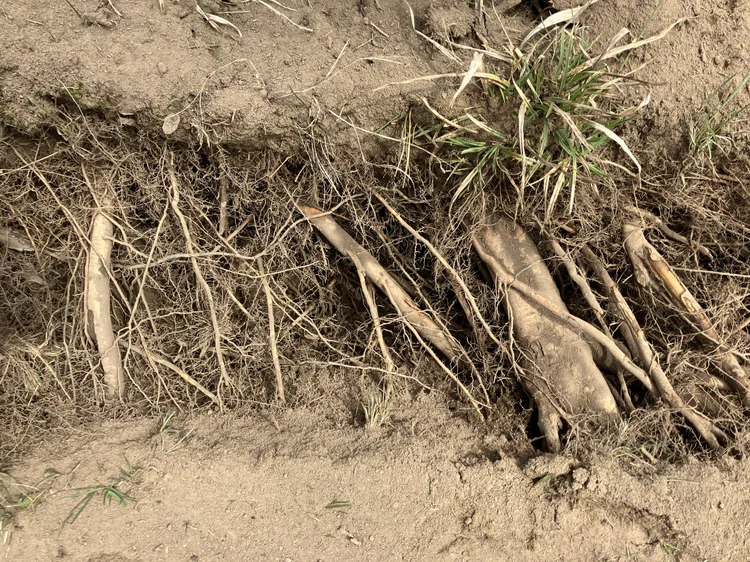
- Root and soil problems. Girdling roots, a buried root flare, compacted soil and grade changes are invisible from above, and they are some of the most common causes of decline on urban lots.
- Construction damage. Roots cut for a foundation, driveway or service line, often showing up one to three years later.
- Pests. Including emerald ash borer, spongy moth and other insects that attack stressed or susceptible trees.
- Disease and decay. Fungal infections, cankers and internal decay, some of which matter far more than others.
- Drought and site stress. Trees in tight urban spaces with little soil and heat from pavement.
- Old pruning or storm wounds that let decay in.
A lot of what’s sold as treatment doesn’t address the cause. Getting the diagnosis right first saves money and, often, the tree.
How a diagnostic visit works
Tell me what you’ve noticed
Send the address, a description and a few photos of the whole tree, the base and the problem area. That lets me come prepared.
Site visit
I look at the whole tree, the root zone, the soil and the site around it. Where the cause is likely underground, I can expose the root collar with an AirSpade without damaging the roots.
Clear answer
I explain what’s going on, how serious it is and what your options are, including doing nothing when that’s reasonable.
Next steps
If work is needed, I’ll tell you what kind of contractor to call, what scope to ask for and what to watch out for. If you need it in writing, I can provide a report.
No conflict of interest
Most free estimates come from companies paid to do the work they recommend. I’m paid for the diagnosis and nothing else, so my only interest is getting it right. If the tree is a risk, I’ll tell you plainly, and you can book a full tree risk assessment. If it’s fine, I’ll tell you that too.
For a quick opinion on one tree, a TreeTruth video consultation may be all you need.
Common questions
Is my tree dying?
Often not. Trees show stress in many ways, and plenty of them recover once the cause is dealt with. Some problems are cosmetic, some can be treated, and some mean the tree is in serious decline. A diagnosis tells you which one you have before you spend money.
Should I remove my tree?
Removal should be a decision you make with all the information, not the first suggestion from someone who will be paid to do it. I do not sell removals, so I can tell you honestly whether the tree can be kept, what it would take, and whether it is worth it.
Can you diagnose from photos?
Sometimes. Clear photos of the whole tree, the base, the bark and the leaves can rule a lot in or out. For those situations I offer video consultations through TreeTruth. Root and soil problems usually need a site visit.
Do I need a written report?
Not for most diagnoses. A site visit with a clear explanation and a plan is usually enough. If you need documentation for an insurance claim, a dispute or a permit, I can provide a written report.
Will you treat the tree or do the work?
No. I diagnose and advise, and I can tell you what kind of contractor you need, what to ask them, and what a fair scope looks like. Keeping the advice separate from the work is what keeps it honest.
Not sure what is going on with your tree?
Send me a few photos and a description. I will tell you whether it needs a visit, and if it does, what I will be looking for.
brent@bhconsultingarb.ca
Based in Hamilton. Working across Toronto, Mississauga, Oakville, Burlington and Hamilton.