
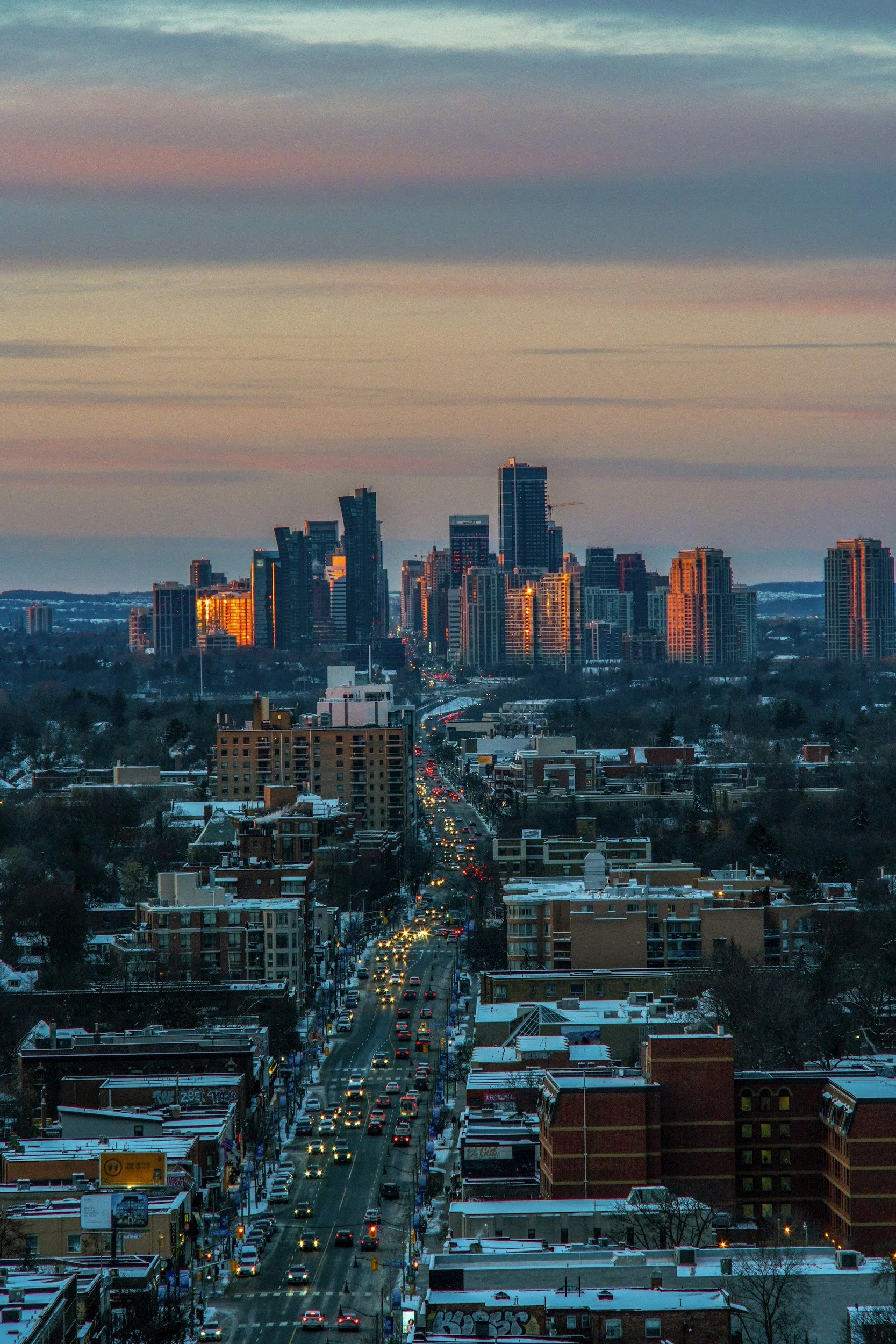
Board Certified Master Arborist Serving Mississauga
Arborist reports and tree protection plans prepared to City of Mississauga Development and Design standards.
Mississauga has one of the lowest private tree thresholds in the GTA at 15 cm DBH. That single number has an outsized effect on development projects in the city, because it means the vast majority of mature trees on residential lots are regulated. Trees that homeowners would not expect to require a permit, trees that look unremarkable, trees that have been growing quietly in a backyard for fifteen years, are captured by this threshold.
The practical consequence is that most development projects in Mississauga require arborist involvement. Lot severances, residential additions, pool installations, new builds, and commercial development all routinely encounter regulated trees. The City's Development and Design division reviews arborist reports as part of the site plan and planning act approval process, and Urban Forestry staff are consulted directly. Their conditions must be satisfied before approvals are granted or building permits are issued.
Mississauga also enforces one of the more demanding replacement planting ratios in the GTA: one replacement tree for every 15 cm of diameter of the removed tree. A 45 cm tree requires three replacement trees. A 60 cm tree requires four. On projects with multiple approved removals, the compensation obligation adds up quickly and needs to be accounted for in the project budget from day one.
Mississauga's Tree Permit By-law (Number 474-05) requires permits to remove or injure trees on private property that are 15 cm or greater in diameter. That includes dead and dying trees, which still require a permit even though they may be exempt from arborist report requirements.
For any tree removal connected to a development application, an arborist report is required regardless of the tree's condition. The report must be prepared by a certified arborist and meet the City's submission standards.
The project types that most commonly trigger arborist requirements in Mississauga are:
Lot severances and infill development. Mississauga's established neighbourhoods are seeing steady severance activity, with single lots being divided and redeveloped. These projects are inherently constrained: the construction footprint competes with mature trees that have had decades of undisturbed root growth. Getting the arborist documentation right on the first submission is essential because the 30-day review clock does not start until the application is complete.
Residential additions, extensions, and pool installations. Rear additions, second-storey builds, and pool installations are common triggers. Even modest projects can affect regulated trees when the root zone of a 15 cm tree extends into the construction area.
New residential construction. New builds on vacant or redeveloped lots where existing trees must be assessed, preserved, or removed with approved compensation.
Commercial and mixed-use development. Site plan applications for commercial, retail, and mixed-use projects where trees on or adjacent to the site must be inventoried and addressed as part of the planning approval.
Site Plan Approval, Minor Variance, and Consent applications. All require arborist documentation. Urban Forestry staff are consulted as part of the planning act approval process and their conditions must be resolved.
What Triggers an Arborist Requirement in Mississauga?
Mississauga's Review Timeline and Compensation Structure
Two aspects of Mississauga's process stand out from other GTA municipalities and are worth understanding before your application goes in.
The 30-business-day review window. Mississauga has 30 business days to review a complete application from the date it is received. The key word is "complete." An application that is missing required information, or an arborist report that does not meet the City's submission standards, resets the clock when the revised submission is received. This makes the quality of the initial submission directly tied to your project timeline. A report that generates a request for additional information does not just delay the arborist component. It delays everything downstream of it.
Replacement planting ratios. When tree removal is approved, Mississauga requires replacement planting at a ratio of one replacement tree for every 15 cm of diameter of the removed tree. Examples:
A tree with a 30 cm diameter requires two replacement trees. A tree with a 45 cm diameter requires three replacement trees. A tree with a 75 cm diameter requires five replacement trees.
Where on-site replanting is not feasible, a security deposit is required and held for one year after replanting is completed. On multi-removal projects, the cumulative replacement obligation can be substantial. I include replacement calculations in every Mississauga report so there are no surprises when the permit conditions arrive.
Dead and dying tree exemption. Dead and dying trees are exempt from the arborist report requirement but still require a permit for removal. This is a narrow exemption. If there is any ambiguity about whether a tree qualifies, the City will require an arborist assessment. And any tree removal connected to a development application requires a full arborist report regardless of the tree's condition.
How Mississauga's Review Process Works
Application submission. The arborist report, tree preservation plan, and permit application are submitted together. The report must cover all regulated trees on the subject property and on adjacent properties within the zone of influence. Each tree is individually assessed with species, DBH, condition, and recommendation.
Development and Design review. For planning act applications, Mississauga's Development and Design division reviews the arborist report as part of the site plan approval process. Urban Forestry staff are consulted and issue conditions that must be satisfied before approvals are granted or building permits issued.
Conditions and compensation. Permit conditions specify which trees are approved for removal, which must be retained with protection, the replacement planting requirements, and the security deposit amount. Replacement planting specifications (species, caliper, location) must be addressed either through an on-site planting plan or cash-in-lieu.
Protection implementation. Tree protection measures must be installed before construction begins. Protection specifications are part of the approved tree preservation plan.
Services for Mississauga Projects
Arborist Reports with Replacement Calculations. Full arborist reports prepared to Mississauga's submission standards, including replacement tree calculations for every proposed removal. Formatted to move through the 30-day review window on the first submission without generating requests for additional information.
Tree Preservation Plans. Protection specifications for retained trees, including hoarding locations, root zone restrictions, grade change management, and construction staging requirements.
Lot Severance and Infill Assessments. Comprehensive assessments for severance and infill projects where the construction footprint conflicts with established trees. These reports address the specific preservation challenges of building on constrained urban lots.
Construction Monitoring. Scheduled site visits to verify protection measures during active construction and document compliance with permit conditions.
AirSpade Root Investigation. Non-destructive root excavation when construction must enter a tree protection zone, or when the City requires verification of root locations before approving encroachment on a retained tree's protection zone.
Early Design Consultation. Pre-design site assessment for architects, builders, and homeowners. On severance and infill projects in Mississauga, understanding the tree constraints before drawings are finalized prevents the situation where a permit application comes back with conditions that require a redesign. The 15 cm threshold means there are almost always more regulated trees on site than people expect.
Turnaround and Process
For most residential and infill projects in Mississauga, turnaround on the arborist report and tree preservation plan is five to seven business days from the site visit. Larger sites or projects with significant tree counts may take seven to ten business days.
The goal with every Mississauga report is a clean first submission that starts the 30-day review clock without interruption. That means addressing the City's submission requirements thoroughly from the start: complete tree inventory, defensible recommendations, replacement calculations included, and protection specifications that satisfy Urban Forestry staff on first review.
Frequently Asked Questions
-
It is one of the lowest. Toronto protects private trees at 30 cm. Burlington at 20 cm. Oakville at 15 cm, matching Mississauga. The practical effect is that significantly more trees are regulated in Mississauga than in most other municipalities. Projects that would not trigger arborist requirements in Toronto often do in Mississauga. If you are used to working in Toronto, expect a broader scope of arborist work on Mississauga projects.
-
Mississauga's 30-business-day review window starts when a complete application is received. If the arborist report is missing required information, or the tree preservation plan does not meet submission standards, the clock resets when the revised documents are submitted. This is why getting the initial submission right matters more in Mississauga than in most other municipalities.
-
One replacement tree for every 15 cm of diameter of the removed tree. A 30 cm tree requires two replacements. A 45 cm tree requires three. A 75 cm tree requires five. On projects with multiple removals, the cumulative replacement count can be significant. I include these calculations in every Mississauga report so you know the full obligation before the permit conditions arrive.
-
Yes. Dead and dying trees are exempt from the arborist report requirement but a permit is still required for removal. If the tree is being removed as part of a development application, a full arborist report is required regardless of the tree's condition.
-
Fees depend on the number of regulated trees, the size of the property, and the complexity of the application. Mississauga's low threshold often means more trees to assess than clients expect, which affects scope. I provide a fixed quote after an initial conversation about your project. No surprises.
Working on a project in Mississauga?
Tell me what you are dealing with. I will tell you what you need, and what you do not.